|
» Home
» The Presidency of MU
» Inauguration Events
» Guest Information
|
|
MU
Home » Faculty,
Staff, and Administration » Office
of the President » Presidential
Inauguration
M.
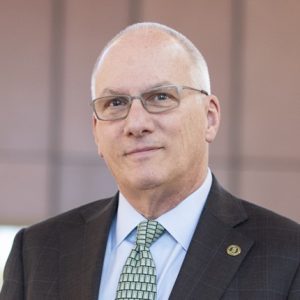
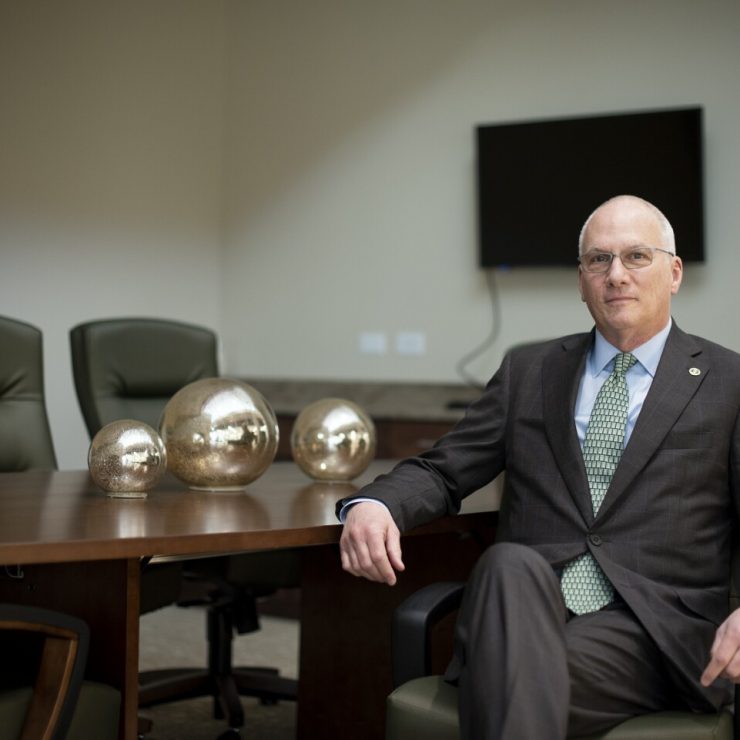
Elton Hendricks became the third president of Methodist University
(then Methodist College) in 1983. When he retired 27 years later, he had
served longer that any of the 36 presidents then working at independent
colleges and universities in North Carolina. An ordained elder in the
United Methodist Church, Dr. Hendricks has served as pastor of Lillington
(NC) United Methodist Church for the last two years.
Hendricks holds a Ph.D. in physics from the University of South Carolina,
a Master of Divinity from Duke University, and a bachelor's, Phi Beta
Kappa, in history from Wofford College. He is also a graduate of Harvard
University's Institute for Educational Management. He has published numerous
articles on Methodism and physics.
Originally from Savannah, GA, Hendricks started his career in the U.S.
Navy as a naval flight officer. After serving his country, he served a
local congregation as a Methodist minister. He began his teaching career
at Eisenhower College teaching physics and philosophy and religion.
He taught at his alma mater, Wofford College and served as both the
school's residence hall education program director and as director of
Admissions. He went on to become the academic dean of Randolph-Macon College.
After serving briefly as Randolph-Macon's acting president, Hendricks
came to Methodist University as president in September 1983.
He served as a member of the North Carolina Association of Independent
Colleges and Universities Executive Committee, the Fayetteville Area Chamber
of Commerce Board of Directors, the National Association of Schools and
Colleges of the United Methodist Church, the Southern Association of Colleges
and Schools, the Fayetteville Economic Development Corporation, the Arts
Council of Fayetteville/Cumberland County, and as president of Cape Fear
Industries. Hendricks also spent several summers with a mission team as
a construction worker in rural Bolivia.
He and his wife, Jerry, have three grown children and four grandchildren.
They reside in the Fairfield Farms area about a mile north of Methodist
University.
Highlights of Dr. Hendricks' Presidency
- Enrollment more than doubled since 1983, and the number of international
students increased six-fold. At the end of 2010, the number of MU graduates
reached 9,904.
- Endowment increased to $15 million.
- Three strategic plans were developed and implemented since 1989.
- Three capital campaigns were successfully completed, netting a total
of $27.4 million.
- College developed a full-certified police (public safety) department
to provide around-the-clock security for the campus.
- Methodist sold tax-free revenue bonds on three separate occasions,
raising $30 million and using the proceeds to restructure existing debt
and finance needed campus improvements.
- Eleven new buildings, a soccer complex, a challenge course, an office
park, and a golf course were built. Major renovations were completed
on residence halls, the science building and the cafeteria.
- Extensive landscaping, Phases I and II of campus irrigation, and a
greenhouse were completed.
- Methodist added twenty-five degree programs (including business administration
majors with concentrations in golf, tennis and resort management) and
three master's degree programs, then secured national accreditation
for five of these programs. In addition, the school added online courses
and established the Reeves School of Business, the Center for Entrepreneurship,
and the Lura S. Tally Center for Leadership Development.
- Methodist required students to sign an academic Honor Code (with specific
penalties for cheating and plagiarism) and created an Honor Board to
handle major infractions.
- Faculty sabbaticals were implemented, and hourly employees were welcomed
into the College’s benefits program.
- Methodist offered its first "full-tuition" academic scholarships
to outstanding students.
- Rooms in all residence halls were wired for telephone, cable TV,
and Internet service.
- A campus computing network, Computer-Assisted Composition Laboratory,
and Writing Center were established.
- Methodist doubled the size of its admissions, development, and public
relations staffs, increased its advertising budget by a factor of 56,
launched a quarterly newsmagazine and a website, developed annual marketing
plans, and hired graphic design professionals to create new and colorful
student recruitment literature, websites, and brochures promoting academic
and athletic programs.
- Women's soccer, football, and women’s lacrosse were added to the roster
of NCAA Division III teams. Methodist joined a new athletic conference,
USA South.
- Methodist's men's and women's golf teams won 32 national championships
(nine for the men and 23 for the women).
- The first history of Methodist University was commissioned in 2002
and published in 2009. In addition, the president funded a University
Archives Room and a full-time university archivist for Davis Memorial
Library. Two college history videos were produced.
- Methodist College became Methodist University in November 2006, fifty
years after it was chartered as a "senior, coeducational college
of liberal arts and sciences."
|
|